

On July 4, 2026, the United States will mark its 250th birthday. For many Americans, the milestone still feels distant—barely on the radar amid the churn of daily headlines. Yet behind the scenes, preparations have been underway for years. A bipartisan commission created by Congress has been coordinating a sweeping national celebration, complete with corporate sponsorships from brands like Coca-Cola, Amazon and Walmart. Across the country, states and major cities are planning parades, museum exhibitions, fireworks displays and prime-time television specials.
On the surface, much of this effort has been positioned as nonpartisan and celebratory. But early in his new term, President Donald Trump signed an executive order establishing a White House “Task Force 250,” aiming to influence how the nation frames its history during the commemoration. Rebranded under the banner “Freedom 250,” the initiative has signaled a more forceful tone—floating ideas ranging from a large-scale prayer gathering on the National Mall to high-profile UFC matches hosted on the White House lawn.
As the countdown to 2026 accelerates, one fundamental question looms: Who gets to shape America’s story at 250? Will the anniversary become a polished, sponsor-friendly spectacle carefully curated to avoid controversy? Or can it hold something deeper—an honest reckoning that embraces both pride and criticism?
The real answer may not emerge from official committees or corporate boardrooms. It will likely come from culture. And in America, culture has long been molded by artists—particularly musicians.
Concert stages have always doubled as civic spaces. When thousands gather in one place to sing along to the same lyrics, something rare happens: strangers experience a shared emotional current. Differences blur. Collective energy builds. It’s a reminder that democracy is not only debated in institutions; it’s felt in moments of connection.
In recent years, research conversations with thousands of Americans have revealed a consistent theme. People are tired of relentless partisan shouting. They recoil at empty patriotism that ignores the nation’s flaws. Yet they also resist narratives that reduce America to nothing but its failures. Most want room for complexity. Many express pride in being American while simultaneously insisting on confronting injustices honestly.
At the heart of American identity lies a simple but demanding idea: ordinary people hold both the power and responsibility to push the country closer to its ideals. It’s embedded in the phrase “We the People.” Not some of the people. All of them.
That’s why the 250th anniversary represents both a challenge and an opportunity. Some will dismiss it outright as a corporate-sponsored holiday, choreographed and sanitized. Others may attempt to monopolize it with rigid ideological narratives. But surrendering the milestone to either extreme risks shrinking what could be a generational moment of reflection.
Artists, however, have a different capacity. They can transform national symbolism into something lived and emotional. Through lyrics, stage design, visuals, collaborations, documentaries and social storytelling, they can stretch the meaning of America 250 beyond pageantry. They can treat the anniversary not as propaganda, but as raw material—unfinished, complicated and worth wrestling with.
When Artists Reframe the Flag
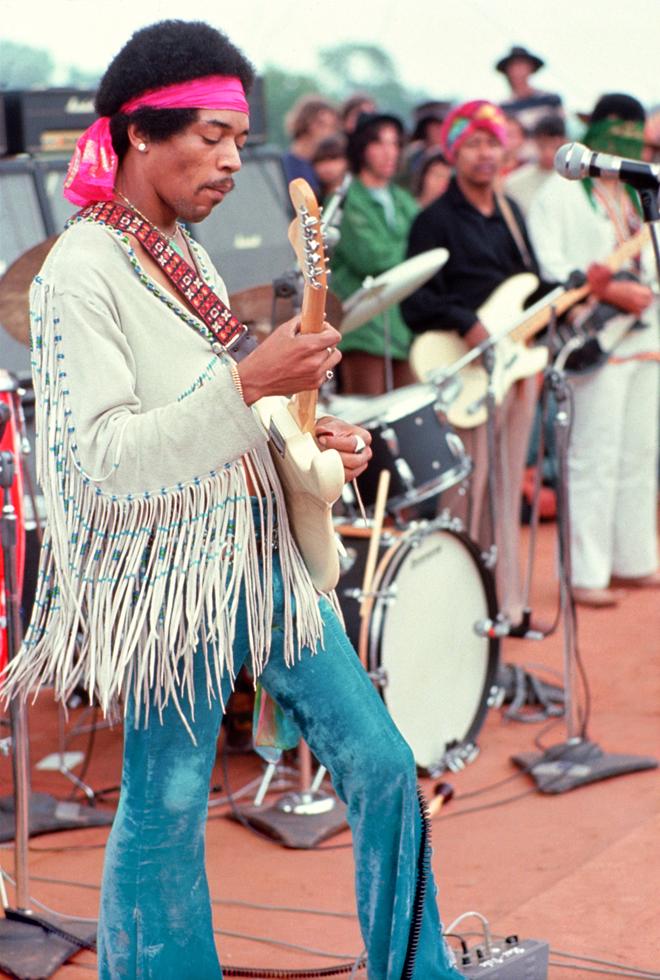
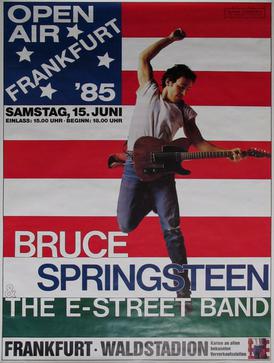

History offers vivid examples.
When Jimi Hendrix electrified “The Star-Spangled Banner” at Woodstock, he didn’t just perform the anthem—he deconstructed it, channeling both pride and protest through distorted guitar riffs.
Bruce Springsteen’s “Born in the U.S.A.” became one of the most famously misunderstood songs in modern music history—simultaneously a stadium chant and a sharp commentary on the treatment of Vietnam veterans.
More recently, Kendrick Lamar used one of the largest stages in entertainment during the Super Bowl halftime show to layer symbolism and storytelling into a cultural flashpoint. And Beyoncé’s Cowboy Carter project reimagined American imagery through a lens of reclamation, challenging narrow definitions of country music and national identity.
These artists didn’t reject American symbolism. They expanded it. They insisted it could hold contradiction.
Anniversaries function like mirrors. The 250th will not simply celebrate the past; it will reflect who the country is in 2026—and who it aspires to become. If artists step fully into this moment, the narrative can pivot away from official podiums and corporate logos and back toward the crowd—the people in the nosebleed seats, the general admission pit, the small-town stages and city blocks.
That, perhaps, is the most authentic form of patriotism: not blind celebration, not relentless condemnation, but a vibrant, sometimes messy chorus of voices claiming ownership of the next chapter. America at 250 does not have to be a finished story. It can be a verse still being written—by the people who sing it.
